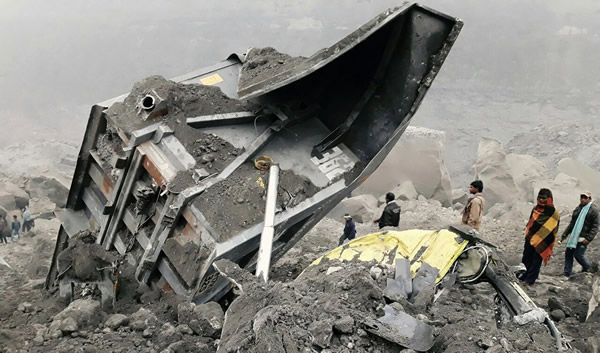
The collapse buried at least 23 miners and dozens of vehicles under the debris as hundreds of emergency workers battled overnight to rescue the men at the Lalmatia open cast mine in Jharkhand state’s Godda district.
“So far eight dead bodies have been recovered and 15 more remain unaccounted for,” RK Mallick, Jharkhand police spokesman, told AFP.

Local police and emergency staff were using earth movers and sniffer dogs to locate the trapped workers under tons of earth.
Prime Minister Narendra Modi expressed his grief on Twitter, promising to help the state government in its rescue operations.
“Saddened by the loss of lives at a mine in Jharkhand. My prayers are with those trapped inside,” he said.
The National Disaster Management Authority dispatched more than 200 rescue workers to the site.
The mine is operated by the government-owned Eastern Coalfields Limited. Its top official, Niladri Roy, told AFP that more than 250 metres (820 feet) of the mine collapsed as workers headed towards the exit around 7:30 pm Thursday.
There was no immediate explanation for the collapse.
In a separate incident on Thursday, four miners were injured at a government-run coal mine in Jharkhand’s Dhanbad district.
A mine official said the workers were hit after the roof of the Putki Balihari coal mine partially collapsed. Two of the workers were critically injured.
Jharkhand is one of the richest mineral zones in India, accounting for around 29 percent of the country’s coal deposits. However it is also one of India’s poorest areas and the epicentre of a Maoist insurgency.
India has maintained a relatively safe record in mining-related accidents compared to neighbour China, which on average reports around 1,000 fatalities every year.
In 2015, India recorded 38 deaths across 570 mining sites.
The last major mining accident in India occurred in 1975, when 372 workers were killed following the flooding of Chasnala mine in Dhanbad.



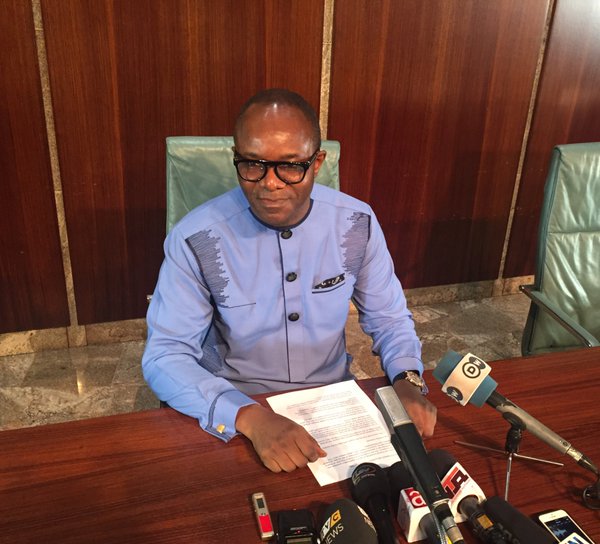


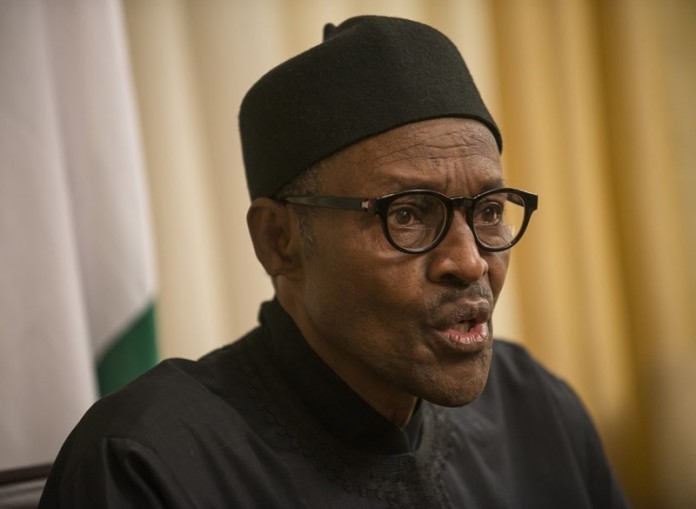
 The came after the national assembly had unanimously approved the budget estimates of N6.06 trillion from the initial N6.08 trillion and transmitted to the presidency with the highlight, but failed to attached the details. Reacting, the president declined to give his assent, insisting on seeing the details. But the details made available later proved to be incredibly padded, prompting the Executive arm to return the budget for a rework. This unfortunately had taken almost 5 months, causing untold hardship on citizenry. But apparently satisfied with the corrections made on the document, the president on Friday put ink on paper, signing the dotted lines.